
Beyond code
Markets & trading systems
Why prices move the way they do — and how to test an idea before trusting it.
It started with small Python bots: scripts watching the forex market for anomalies and placing trades on MetaTrader 5. Most of them lost money. What they taught me was worth more than any single trade: a strategy you haven't tested honestly is just a story you tell yourself.
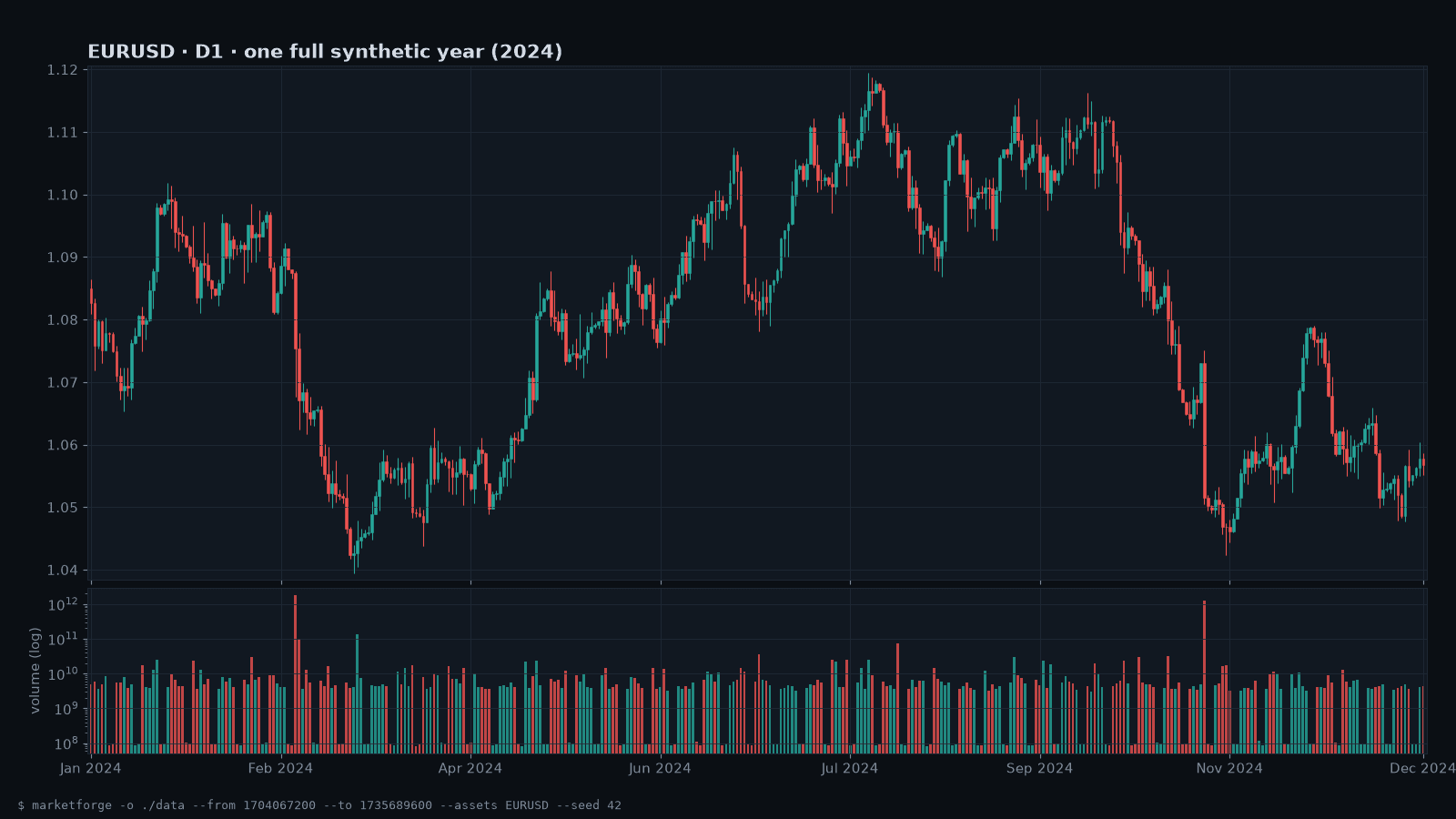
So the projects got more serious. A backtesting engine in Python that syncs historical candles from MetaTrader 5 into ClickHouse and replays strategies with spread, slippage and commission. A signal copier written in Rust that reads trading signals from Telegram channels and turns them into orders. Then BackTrade, which replays whole markets as if they were live, and MarketForge, which generates synthetic market data realistic enough to stress-test everything above.
What keeps me hooked is that markets are a perfect adversarial test bed: noisy data, heavy tails, regimes that change without warning. Engineering discipline matters more than clever ideas.
Worth trying: take a strategy you believe in and backtest it with realistic costs. Most edges disappear — and that's the lesson.
Gallery · 3
One full synthetic year of EURUSD, generated by MarketForge Volatility clusters, while returns stay unpredictable BackTrade: replay any past moment as if it were live