
Lab · Experiment
Tone grid
Interactions · Ready to explore
A tiny pentatonic step sequencer: toggle notes and hear the loop.
Try this
Turn the sound on, then click cells to add or remove notes. Each column is one step of the loop.
Before you start
- Sound needs a browser with the Web Audio API, and only starts when you turn it on.
The idea, and what I learned
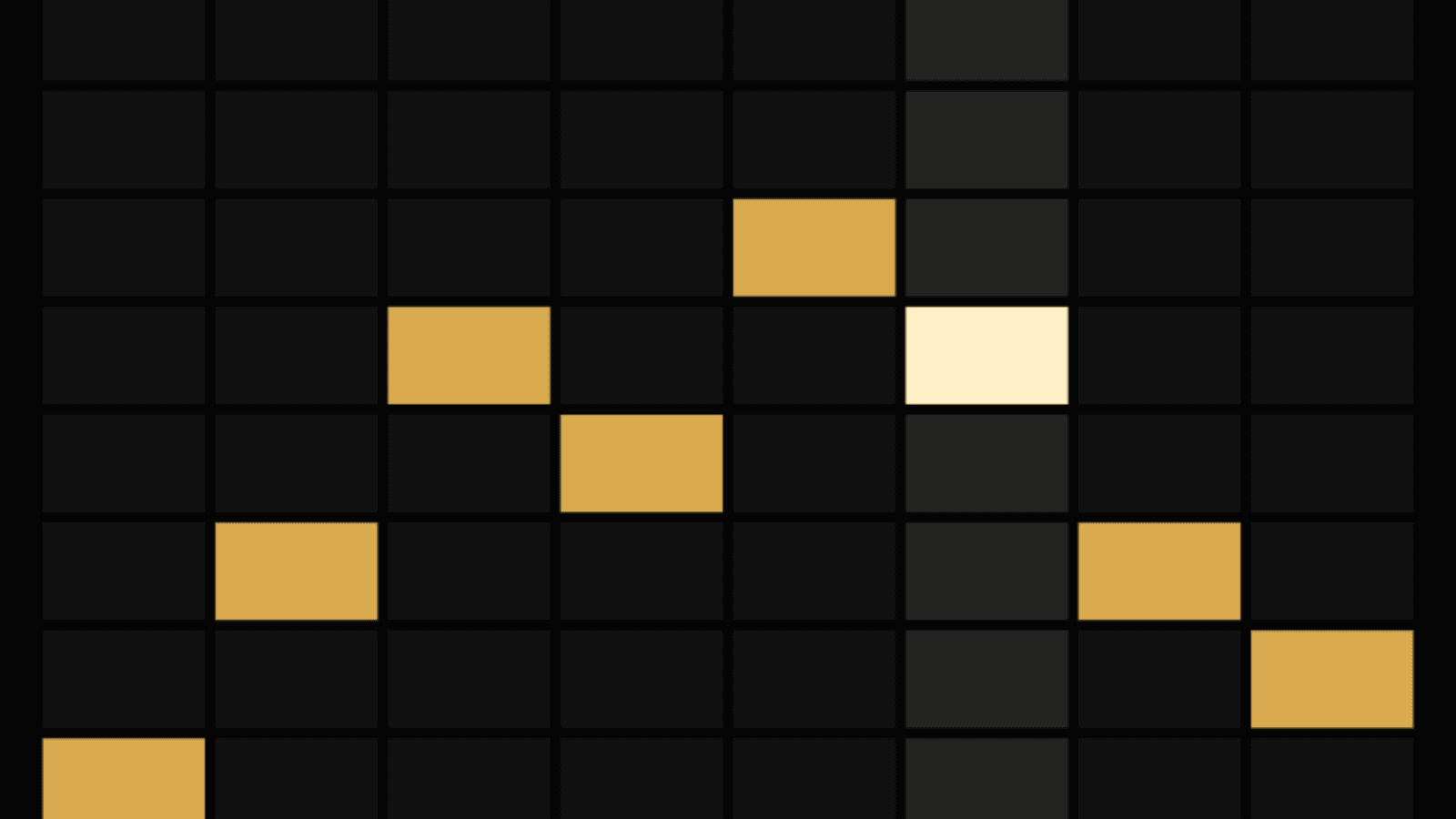
The question: what's the smallest instrument that still feels musical? Eight steps and eight notes from the A minor pentatonic scale — a scale with no clashing intervals, so almost any pattern sounds reasonable.
Each note is a short triangle-wave tone with a quick fade, played through the Web Audio API. The audio engine isn't even created until you ask for sound.
What I learned: constraints make things approachable. Given every note, most people freeze; given a pentatonic grid, everyone makes something within seconds.
Walkthrough, without running it
- The grid has eight columns (time) and eight rows (pitch, lowest at the bottom).
- It starts with a simple melody already switched on, one note per column.
- A highlight sweeps from left to right; every lit cell in the highlighted column plays.
- Clicking a cell toggles its note, and stacking cells in one column plays a chord.
- The tempo slider sets the speed of the sweep, from 60 to 200 BPM.
- With the sound off the grid still animates, so you can compose silently and listen later.